


“Indeed, horses have the hearts of warriors and often carry us into and out of fields of personal battles. Those who know them understand how fully a horse can hold a human heart.”
– Lauren Davis Baker
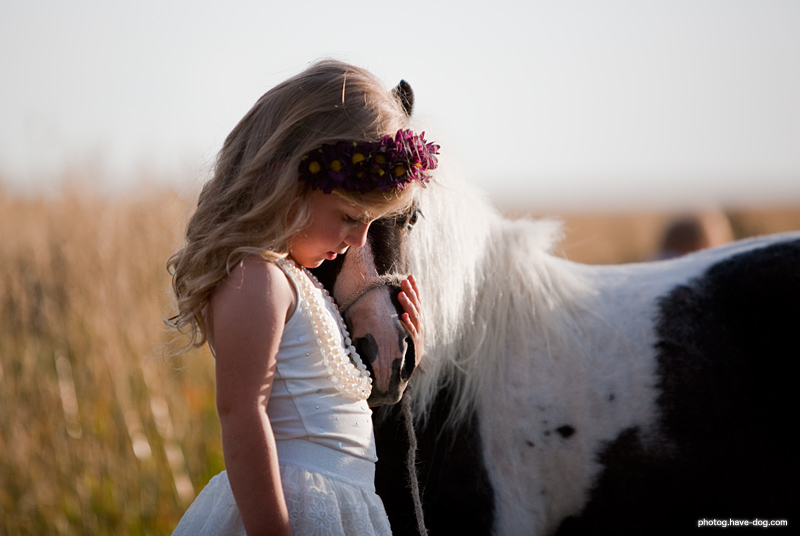
Italian race horse breeder, Frederico Tesio once said, “A horse gallops with his lungs, perseveres with his heart, and wins with his character.”
Renowned horse trainer and mentor Pat Parelli instructed, “A horse doesn’t care how much you know until he knows how much you care. Put your hand on your horse and your heart in your hand.”
Literally and anatomically defined, the heart is “a hollow muscular organ of vertebrate animals that by its rhythmic contraction, acts as a force pump maintaining the circulation of the blood…” as defined by the Webster Dictionary.
The horse heart is not dissimilar. It functions in a similar manner on a larger scale. Both are four chambered, located in the between the lungs and ribs and above the diaphragm, and both have two main functions: to pump oxygen and nutrients into the bloodstream and through the body.
Interestingly, in contrast to its size, the adult equine heart beats 30-40 beats per minute, while the smaller human heart beats about 60 times per minute. The equine heart is more efficient, and it’s equine “power-train” increases rapidly to an imposing 240 beats per minute when galloping. The efficiency is also remarkable, returning to its resting rate very quickly. Strenuous exercise creates the ability to deliver high volumes of blood for extended periods of time – as much as seven times that of the human heart.
Physiologically speaking, the equine heart has evolved to support intense and varied levels of athleticism, and it is often said that a horse has more than one heart. Like other mammals, a horse has only one physical heart – however, speaking in terms of cardiovascular efficiencies, the frog in each hoof pumps the blood back up to the heart from its lower legs, with every step taken. A grounded hoof expands and fills with blood, and as it leaves the ground, it contracts, sending the blood back to the heart. It is estimated that as a horse walks, it pumps a litre of blood through its body approximately every 20 meters or so, figuratively supporting the concept of more than one heart.
Yet, there is more to the equine heart than just that. Many horses have the physiological characteristics to win and to persevere. Secretariat and Phar Lap are two examples of exceptional race horses with hearts that were larger than the normal, (Secretariat’s weighed 22 lbs., while Phar Lap’s weighed 14 lbs.) Then there are the horses who succeed by sheer will and determination. This definition of “heart,” although intended to describe a very real characteristic in the horse, is immeasurable. Take Canada’s Big Ben for example; he survived two colic surgeries, a car accident, competed three times in the Olympics and won more then 40 Grand Prix titles with his rider, Ian Miller.
In this next series of blogs, we’ll share some other stories of many remarkable equines who due, either to the bond formed with their person or their exceptional courage, are in a league of their own because of their hearts.
.jpg)
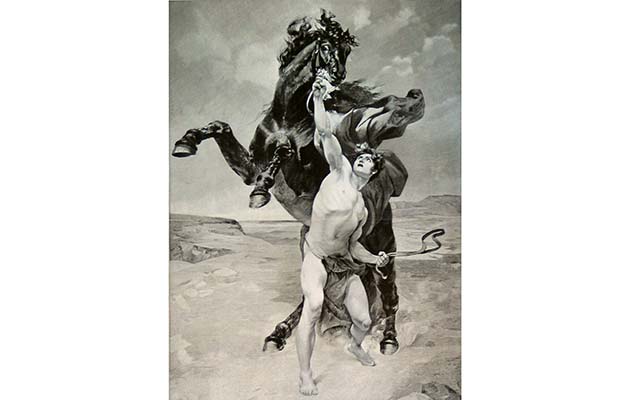
Bucephalas (the steed of Alexander the Great)
One of the most famous stories of classical antiquity (the Greco-Roman era), is that of Bucephalas, a massive black stallion with an oversized head. He was said to have a large white star on his forehead (brow) and blue eyes, developed from the best of Thessalian cavalry lineage. The Thessalian cavalry had been formed previous to the reign of Philip, father of Alexander the Great, however, it was Philip’s enhancement of it, that made the cavalry and its horses, such a formidable force.
It was the Greek historian, Plutarch, who chronicled that when Alexander was about 12 or 13-years-old, a horse was brought to King Philip from a herd by a neighbouring breeder, Philoneicus of Thessaly. He was priced about three times the norm (thirteen talents! or about $4 Million dollars today), and described as wild and unmanageable, rearing up against any and all who tried to manage him. Alexander’s father instructed the breeder to take him away.
Alexander, however, saw a noble creature – branded on his haunch with the figure of an ox-head (one of three common brands in ancient Greece).
He challenged the handlers, calling them spineless. His father admonished him, asking, “Do you reproach those who are older than yourself, as if you were better able to manage him than they?”
Alexander responded, “What an excellent horse do they lose for wont of address and boldness to manage him!”Then he approached the horse. Realizing he was facing away from the sun, and spooking at the unfamiliar noises and the sight of his own shadow, Alexander turned him the opposite direction, spoke quietly to him, then gently gathering the reins, calmly mounted him. They were one.
From that day forward, they were inseparable. Alexander was the only one who could ride him. Together in battle from Greece through Persia, and into India, Bucephalas was a much-beloved war-horse.
At one juncture, after Alexander defeated Darius III of Persia in the Battle of Gaugemela, Bucephalas was stolen while Alexander was away on excursion. Alexander was so incensed, he threatened to kill every inhabitant and lay the countryside to waste if his horse was not returned. He was, with a heartfelt plea for mercy.
Although some dispute the cause of Bucephalas’ death; battle wounds vs. old age, Plutarch quotes an historian who accompanied Alexander to war. Onesicritus cited the horse as having died of old age after the Battle of Hydaspes River (326 BCE) placing Bucephalas at approximately 30 years of age. Alexander was so distressed, he named one of his captured cities, Bucephala, on the west bank of the Hydraspes River in modern day Pakistan. He is believed to be buried in the modern-day town of Jalalpur Sharif.
Notwithstanding his legendary status as a warrior, his legend grew in context with that of Alexander’s. According to one story, previous to his last battle, Bucephalas paired with multiple wild mares in the Middle East and Asia, fathering a breed of rare and supernatural species – that of the mythical unicorn.